Inflation
A basket of bread, milk and bus rides cost $60 in year 0 and $63 in year 1, so the price index moved from 100 to 105. From that one sum you can build everything in this course: inflation rates, real wages, real interest, the causes of rising prices, the rare cases of hyperinflation and deflation, and what central banks do about them. Each new word, such as real wage or hyperinflation, is explained in the unit where it first appears.
About this course
A basket of 10 loaves of bread, 5 bottles of milk and 20 bus rides costs $60 in year 0 and $63 in year 1. Divide 63 by 60, multiply by 100, and the price index moves from 100 to 105. That one sum is the model for the whole course. Every later unit asks what a few points on that index do to wages, savings, loans and governments.
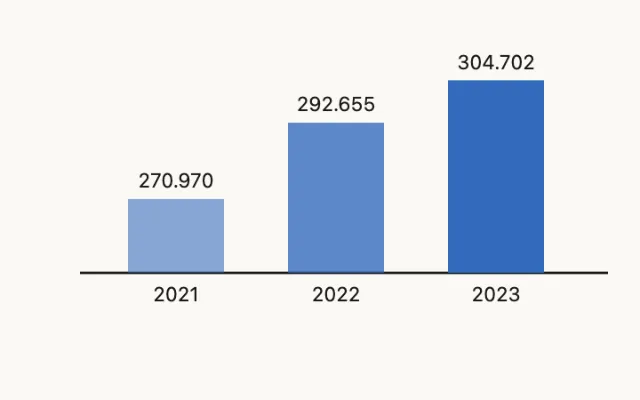
The seven units start with measuring. The US CPI-U averaged 304.702 in 2023 against 100 in 1982 to 1984, so the basket cost 3.047 times as much. Next comes the rate formula, the change divided by the earlier index. The US index went from 270.970 in 2021 to 292.655 in 2022, which is 8.0%, and then to 304.702, which is 4.1%. Prices still rose, so that is disinflation, not deflation. The real and nominal unit shows that a raise from $20.00 to $22.00 is 10%, but prices rose 12.4%, so the real wage fell about 2.2%. The causes unit covers demand-pull, cost-push and the equation M × V = P × Y. The unit on extremes looks at Germany in 1923, when a dollar cost about 4.2 trillion marks. The central bank unit explains the policy rate and the usual 2% target. The last unit turns it into budgets: 3,000,000 won a month grows to 3,477,822 won in five years at 3%.
In January 2009 the Reserve Bank of Zimbabwe issued a note worth 100 trillion Zimbabwe dollars, which was barely enough for a few bus tickets. In April 2009 the government allowed foreign currencies, mainly the US dollar, and the Zimbabwe dollar was abandoned. The course uses this case to show money failing at all three of its jobs at once.
Before you start
You need to be comfortable with percentages, decimals and multiplying by a rate, as in Decimals and percent. The causes unit uses the supply and demand model, so Supply and demand helps, although the course explains each step. A calculator is useful for the compounding examples, such as 1.02 raised to the 10th power.
When you finish
You can build a price index from a small basket and turn it into an inflation rate, dividing by the earlier index. You can change a nominal wage or interest rate into a real one and tell disinflation from deflation. You can explain demand-pull, cost-push and money-growth causes, and say how a policy rate works and why central banks aim for about 2%. You can also plan a budget with a growth factor.
- 1What inflation is and how prices are measuredInflation is a sustained rise in the general level of prices. To measure it, statisticians price the same shopping basket again and again and turn the cost into an index.
- 2Calculating an inflation rateThe inflation rate is the percentage change in a price index between two dates. The same formula gives yearly rates, multi-year totals and the value of old dollars in today's money.
- 3Real and nominal: wages and interestA nominal number is measured in money of the day. A real number is corrected for changing prices, so it shows what the money can actually buy.
- 4Why prices rise: demand, costs and moneyEconomists group the causes of inflation into demand-pull, cost-push and too much money chasing too few goods. They are three views of the same price level.
- 5Deflation and hyperinflation: dated casesPrices that run away or fall year after year are rare, but each case in history shows how damaging the extremes are.
- 6How central banks respondCentral banks steer inflation mainly through a short-term policy rate. Most of them aim for about 2% a year.
- 7Inflation in daily lifeInflation changes what savings, loans and prices mean for a household, and it carries small costs even when it is low.
Course map
Economics · Courses: 3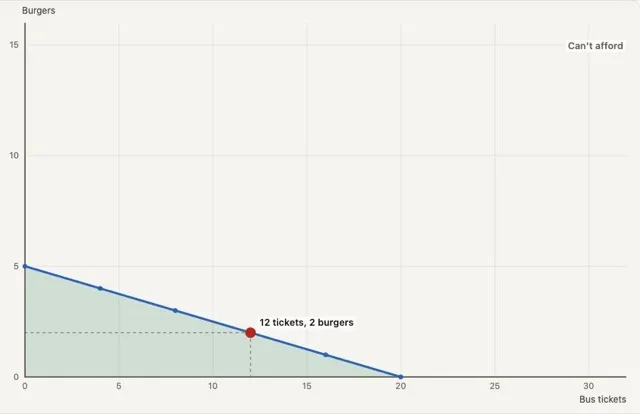
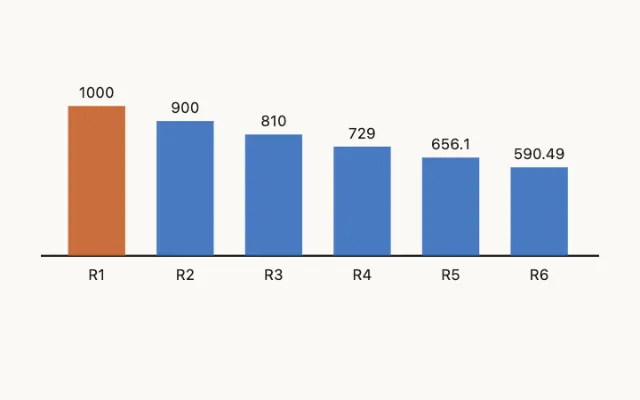
Sources for this course (16)
- OpenStax, Principles of Economics 3e , openstax.org/books/principles-economics-3e: the inflation chapter (tracking inflation, price indexes and the basket of goods, how price changes affect different groups, costs of inflation, menu costs and shoe-leather costs)
- the chapters on money and banking and on monetary policy (quantity theory MV = PY, central bank tools, inflation targeting, Volcker disinflation)
- and the aggregate demand and supply chapter (demand-pull and cost-push inflation, 1970s oil shocks)
- US Bureau of Labor Statistics, Consumer Price Index handbook of methods and CPI-U annual averages 2021 270.970, 2022 292.655, 2023 304.702 on the 1982-84 = 100 base (bls.gov/cpi)
- Board of Governors of the Federal Reserve System, Federal Open Market Committee statement on longer-run goals and monetary policy strategy, 2% inflation measured by PCE since January 2012
- federal funds target range 0 to 0.25% until March 2022 and 5.25 to 5.50% from July 2023 (federalreserve.gov)
- 한국은행: 물가안정목표(중기 2%)
- 기준금리 추이(2021년 8월 0.50%에서 2023년 1월 3.50%) (bok.or.kr)
- 한국은행 경제교육 자료. 통계청(Statistics Korea) 소비자물가지수 2020 = 100, 연간 상승률 2022년 5.1%, 2023년 3.6%, 2024년 2.3% (kostat.go.kr)
- 고용노동부 고시, 최저임금 2025년 10,030원, 2026년 10,320원 (moel.go.kr, minimumwage.go.kr)
- US Social Security Administration, cost-of-living adjustment of 8.7% for 2023 (ssa.gov/cola)
- Britannica entries on the German hyperinflation of 1923 (4.2 trillion marks per US dollar in November 1923, Rentenmark)
- the Great Depression, and the 1970s oil crisis. Cagan, The Monetary Dynamics of Hyperinflation (1956)
- 50% per month definition. Hanke and Krus, World Hyperinflations (Cato Institute working paper, 2012): Hungary 1946, Zimbabwe 2008. Reserve Bank of Zimbabwe 100 trillion dollar note (January 2009)
- Bank of Japan, negative interest rate policy January 2016 to March 2024 (boj.or.jp)
- All index sums, rates and compounding below were recomputed by hand and with a calculator script.
Checked: 2026-10-27